
A moral battle where courage, restraint, and righteousness transformed a nation.
Introduction: The Power of Restraint
Can change happen without violence?
In 1960, a group of students in Nashville answered this question through action. Facing hostility, they chose discipline over retaliation. Their courage demonstrated that righteousness is not only about standing up—but also about how you respond.
This exhibit explores how their actions reshaped a nation and how their strategy strengthens your critical thinking skills for the SAT.
Section 1: Basic Overview of the Event
In the winter and spring of 1960, a group of mostly Black college students in Nashville, Tennessee, executed one of the most disciplined and morally powerful protests in American history. Their target: the lunch counters of downtown department stores, which served Black customers everywhere in the store except at the food counter — a daily humiliation designed to enforce white supremacy.
What made Nashville unique was meticulous preparation. Months before the first sit-in, students from Fisk University, American Baptist College, and Tennessee A&I attended nonviolence workshops led by Rev. James Lawson, a graduate student who had studied Gandhi’s techniques in India. They practiced enduring racial slurs, cigarette burns, ketchup poured over their heads, and physical beatings — without ever striking back. They role-played attackers and victims until restraint became instinct.
On February 13, 1960, over 100 students walked silently to downtown stores, sat at “whites-only” counters, and politely asked for coffee. Denied service, they remained seated until closing. Day after day, they returned. When police arrested 150 students, new protesters immediately replaced them. When white mobs attacked them with fists and brass knuckles, they refused to fight back — absorbing blows while protecting their heads.
The moral breakthrough came on April 19, 1960, after a bomb destroyed the home of their lawyer, Z. Alexander Looby. Thousands marched silently to City Hall. There, student leader Diane Nash confronted Mayor Ben West with a simple question: “Mayor West, do you feel it is morally wrong to discriminate against a person solely because of their race?” The mayor, visibly moved, admitted: “Yes, it is morally wrong.”
Within three weeks, Nashville became the first major Southern city to desegregate its lunch counters — without a single act of violence from the protesters. The Nashville model became the blueprint for the entire Civil Rights Movement, inspiring the Freedom Rides, the Birmingham Campaign, and the March on Washington. It proved that discipline defeats violence, righteousness overcomes hatred, and restrained courage can change history.
Table 1. Key Facts about the Nashville Sit-Ins
| Category | Details |
|---|---|
| Event | Nashville Sit-Ins |
| Year | 1960 |
| Location | Nashville, Tennessee |
| Participants | Student activists |
| Goal | End segregation in public spaces |
| Method | Nonviolent protest |
| Outcome | Desegregation of lunch counters |
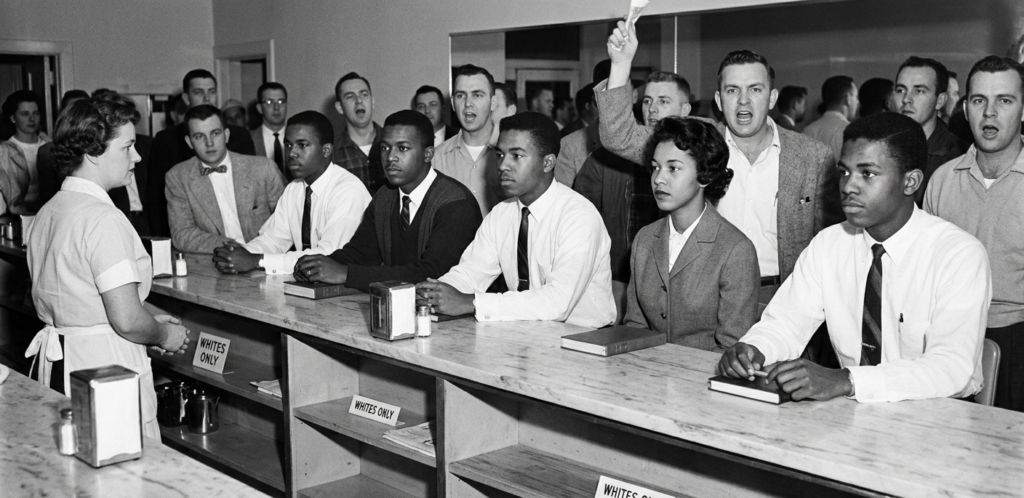
Figure 1: The Nashville Sit-Ins (1960) — A Moment of Disciplined Resistance
Section 2: Righteous Moments and Decisions
Table 2. Key Righteous Actions
| Event | Decision | Righteous Principle |
|---|---|---|
| Sit-in Participation | Remained seated peacefully | Courage |
| Facing Harassment | Did not retaliate | Self-control |
| Arrests | Accepted consequences | Integrity |
| Continued Protest | Persisted over time | Perseverance |
The participants demonstrated that righteousness is not only about what you fight for, but how you fight. Their disciplined behavior transformed public perception and strengthened their cause.
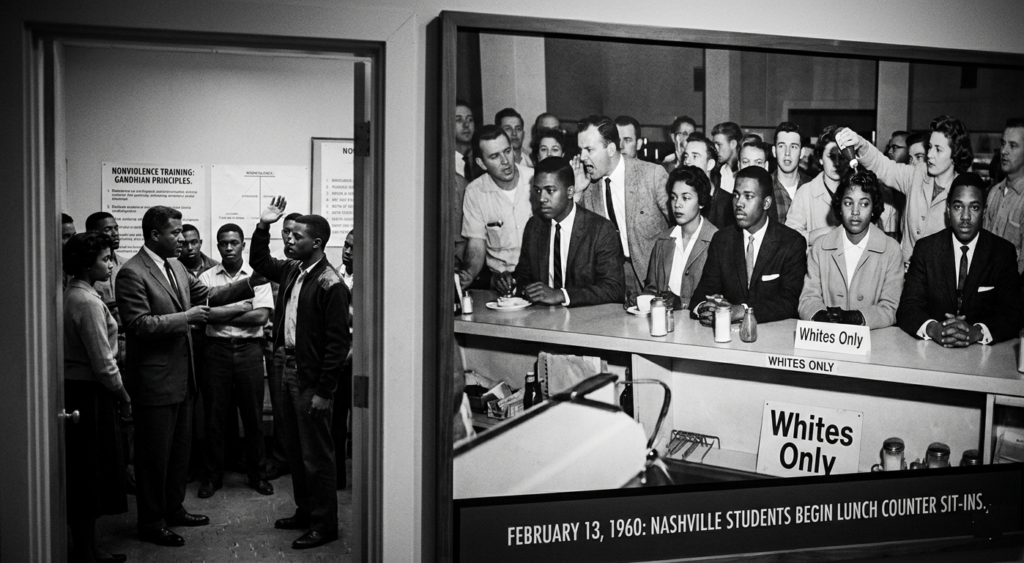
Figure 2. Key Righteous Moments
Section 3: Righteous Innovation in History
The Strategic Breakthrough
Previous civil rights efforts relied on legal challenges (slow, easily ignored) or economic boycotts (effective but indirect). Nashville added direct moral confrontation — sitting in the oppressor’s space, demanding service, and forcing a public choice between decency and discrimination.
Table 3. Traditional Protest vs. Nashville’s Pioneering Approach
| Aspect | Traditional Protest Methods | Nashville Sit-Ins (Pioneering Innovation) |
|---|---|---|
| Response to Violence | Fight back (retaliation) or flee (retreat) | Absorb violence without retaliation — turn the other cheek as a weapon |
| Goal | Defeat the enemy (win/loss mindset) | Convert the oppressor through exposed conscience |
| Training | Minimal or none — spontaneous action | Rigorous role-play rehearsals — weeks of practicing restraint under attack |
| Media Strategy | Incidental coverage | Deliberate provocation — sit where cameras will capture the contrast between peaceful dignity and violent racism |
| View of Opponent | Evil enemy to be destroyed | Misguided human capable of moral awakening |
| Definition of “Victory” | Force concession through power | Force concession through shame — make discrimination publicly unbearable |
| Leadership Model | Top-down (single charismatic leader) | Decentralized — every trained student was a leader; arrests created replacements |
| Use of Law | Challenge laws in court (distant, slow) | Violate unjust laws openly — then accept arrest to overload the system |
| Emotional Framework | Anger and vengeance | Righteous anger channeled into disciplined action — no hatred, only justice |
| Long-Term Impact | Often temporary gains | Creates a replicable blueprint — exported to other cities and movements |
The Lasting Legacy
The Nashville model became the operating system for the 1960s Civil Rights Movement. The Freedom Rides (1961), Birmingham (1963), and Selma (1965) all used the same playbook: train rigorously, provoke nonviolently, absorb attacks publicly, and let the moral contrast do the work.
No other protest movement in American history has achieved so much with so little physical force — precisely because Nashville’s righteous innovation proved that the strongest weapon is not a fist, but a conscience that refuses to fight back while refusing to back down.
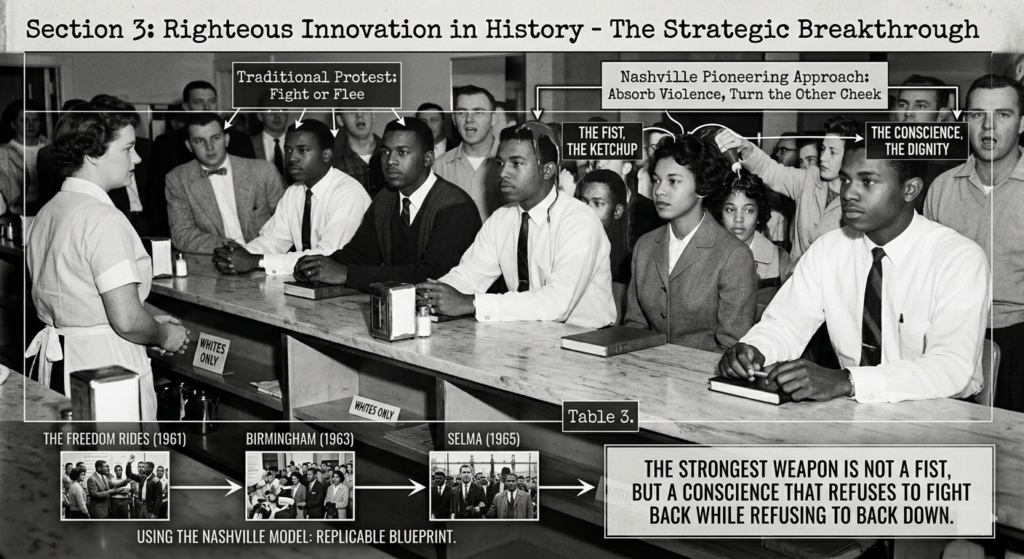
Figure 3. Strategic Innovations of the Nashville Sit-Ins: A Blueprint for Change
Section 4: Hard Times and Resilience
Courage Under Pressure
Participants faced intense challenges during the protests.
Table 4. Challenges and Responses
| Challenge | Description | Response |
|---|---|---|
| Verbal Abuse | Insults and threats | Remained calm |
| Physical Harassment | Attacks from opponents | Did not retaliate |
| Arrest | Legal consequences | Accepted peacefully |
| Social Pressure | Community tension | Continued protest |
Despite facing hostility, the students remained committed to nonviolence. Their ability to stay disciplined under pressure strengthened their movement and demonstrated the power of moral courage.
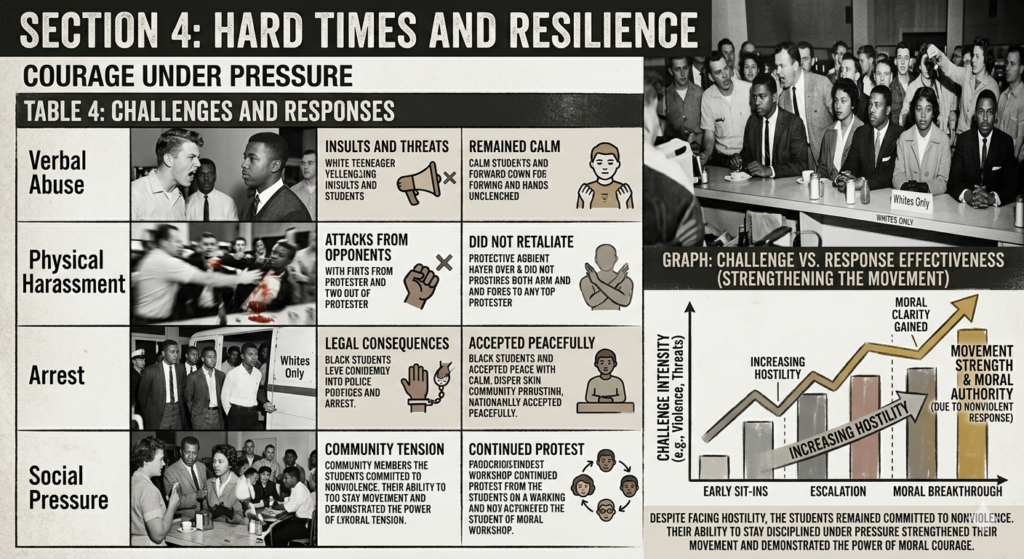
Figure 4: Resilience Under Fire — The Relationship Between Adversity and Moral Authority
Section 5: Museum-Inspired SAT Questions
Passage
The Nashville Sit-Ins showed that disciplined nonviolence can influence social change. Participants remained calm despite opposition, demonstrating that restraint can be more powerful than force. Their actions gained public support and contributed to desegregation.
Q1. Main Idea
A. Violence is necessary for change
B. Nonviolent discipline can create meaningful change
C. Conflict should be avoided entirely
D. Authority always controls outcomes
Q2. Evidence-Based Question
A. Participants protested
B. They remained calm under pressure
C. They were arrested
D. They gathered in groups
Q3. Vocabulary in Context
“Restraint” most nearly means:
A. Weakness
B. Limitation
C. Self-control
D. Delay
Section 6: Think Like a Leader
You are part of a protest facing opposition.
Which action reflects righteous behavior?
A. Respond with force
B. Remain calm and disciplined
C. Withdraw immediately
D. Ignore the situation
Section 7: Riddle
I fight without striking,
Stand firm without fear.
Through calm and control,
I make justice appear.
What am I?
SAT Skill Connection
This section helps you practice identifying main ideas, analyzing evidence, and understanding vocabulary in context—core skills tested on the SAT.
By analyzing real historical events, you strengthen your ability to interpret passages and think critically.
Section 8: Apply the Lesson
What does discipline mean in difficult situations?
Write 2–3 sentences about a time when staying calm helped achieve a better outcome.
✅ Answer Key
- Q1: B
- Q2: B
- Q3: C
- Puzzle: B
- Riddle: Nonviolent discipline (or restraint)
References
Student Nonviolent Coordinating Committee. (1960). Nashville sit-ins movement records.
Halberstam, D. (1998). The children. New York, NY: Random House.
Lewis, J., & D’Orso, M. (1998). Walking with the wind: A memoir of the movement. New York, NY: Simon & Schuster.